


Dungeons & Dragons Merchandise at Nerdbutiken.se – Your Guide to the Right Gear
Dungeons & Dragons merchandise has become more than just cool collectibles – the right D&D merch can actually make game night smoother, clearer, and more fun. But which dice should you choose, are miniatures worth the investment, and what DM accessories make the biggest difference at the table? In this guide, we address the most common questions and pitfalls that arise when buying dice, minis, books, and accessories – and show you how to find the right items at Nerdbutiken.se.
You'll get a quick overview of the most important categories (dice sets, battle maps, dice trays, clothing, decor, and gift tips) and concrete choices based on playstyle and budget. Special focus is placed on a unique angle: how to build a well-thought-out table setup on a Swedish budget, so that every purchase becomes a tool for better immersion – not just an impulse buy.
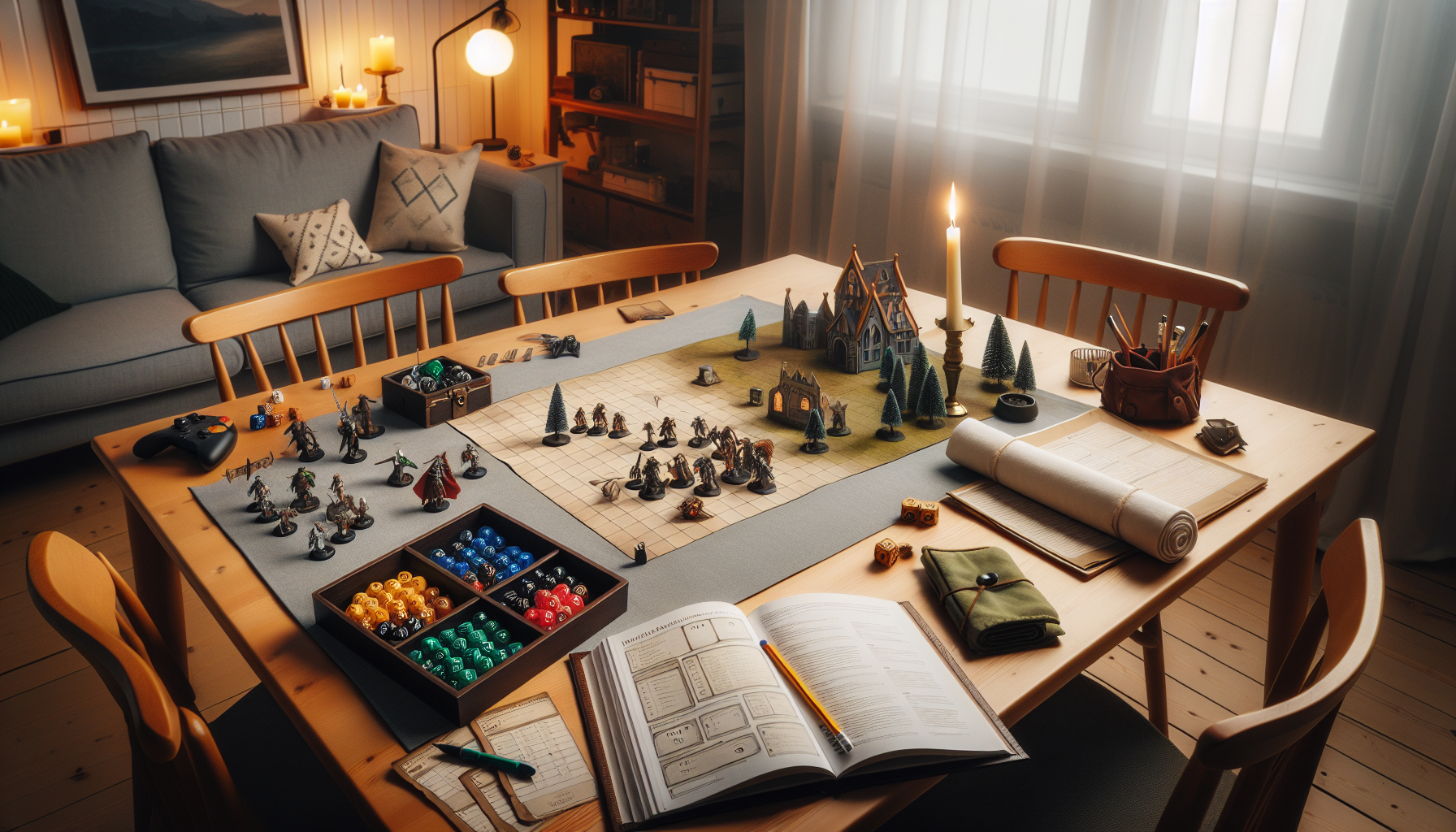
Dungeons & Dragons merchandise is more than just “cool stuff”: the right products can make game night smoother, clearer, and more atmospheric. At Nerdbutiken.se, you'll find both classic must-haves (like dice and DM accessories) and everyday merch that lets you show your love for D&D away from the game table. The big question many people have—which items are actually worth the money?—is best answered by thinking about utility, not hype.
Officially Licensed vs. Fantasy-Inspired – What's the Difference?
Top-ranked content often highlights the importance of understanding what you're buying: is it official/licensed D&D (with logos, factions, and well-known motifs) or more TTRPG/fantasy-inspired (which works equally well regardless of game world)? Both can be right—but for different reasons:
-
Licensed D&D merch: a safe choice for collectors and as a gift; clear connection to the brand and often consistent quality.
-
Inspired products: wider range of styles (colors, themes, materials) and can suit campaigns that aren't “classic” D&D.
-
Practical top categories: dice, miniatures, dice trays/dice towers, DM tools, posters/prints, clothing, mugs, and bags—items that reappear in guides because they either speed up gameplay or enhance the atmosphere at the table.
An often-missed detail: check product info for size and compatibility (e.g., whether your dice tray can hold metal dice without them bouncing out, or if the bag has compartments for books and minis).
Why Buy D&D Gear in Sweden (and How to Set “Merch Goals”)
Buying through Nerdbutiken.se can offer faster delivery, easier returns, and a more predictable price without surprises regarding customs and VAT. To choose correctly: set a “merch goal” based on your role—beginner (basic gear), DM (flow and overview), collector (condition/edition), or cosplayer (wearable style). This way, each purchase becomes part of a well-thought-out setup, not just another item on the shelf.
Dice for D&D – Materials, Sets, and How to Choose the Right Ones (Without Getting Caught in the Hype)
Dice are the heart of Dungeons & Dragons: they drive pace, excitement, and decisions at the table. But this is also where many get caught in "dice hype" and buy the wrong set—too pretty but hard to read, too heavy for the table, or too few of the right kinds. At Nerdbutiken.se, you'll find everything from classic polyhedral sets to premium options and smart accessories, so you can build a dice collection that actually improves game night.
Which Dice Do You Need – and Which Do You Need More of?
Most top-ranked guides agree on the basics: a standard set with d4, d6, d8, d10, d12, and d20 is enough to get started. For smoother gameplay (especially at higher levels), however, it's worth thinking practically:
-
Basic set (d4–d20): sufficient for beginners and "theater-of-the-mind" tables
-
Extra d20: nice for advantage/disadvantage and quick attack rolls without borrowing
-
Extra d6: often gold for classes/spells that roll many dice (e.g., sneak attack, some spells) and for damage dice in bulk
-
Extra d10: useful if you often roll percentages (d100) or use effects with multiple d10s
Unique rule of thumb: if you frequently roll the same type of damage multiple times per round, buy a double set of precisely those dice—it saves more time than yet another "fancy" set.
Materials, Readability, and Accessories That Make a Difference
The choice of material affects both feel and function:
-
Resin/acrylic: best "everyday dice"—affordable, durable, and often easy to read
-
Metal: premium feel but can be noisy and wear on the table—combine with a dice tray
-
Sharp edge: crisp aesthetic, but choose primarily if the contrast in the numbers is clear in subdued lighting
-
Stone/glass: beautiful collector sets—best with good storage and more careful use
My best "dice strategy" for campaign play: 1 premium set (for important moments) + 1 robust everyday set (for everything else) + extra d6/d20. Add a dice tray or a dice tower if you play on hard tables or want to reduce dice flying off—it improves both order and game pace.
Miniatures, Battle Maps, and Terrain – How to Build a Visually Strong Game Night
Miniatures and maps are among the most sought-after Dungeons & Dragons accessories for a simple reason: they make battles and exploration clearer, faster, and more memorable. When everyone sees exactly where the paladin stands, how far the fireball reaches, and which enemy has "cover," discussions decrease and the pace at the table increases. At Nerdbutiken.se, you'll find everything from minis and tokens to battle maps and terrain—perfect when you want to transition from "theatre of the mind" to a more visually driven game night without going all-in right away.
Choose the Right Level: Tokens, Minis, and Maps That Suit Your Playstyle
-
Pre-painted minis vs. unpainted: Finished figures offer immediate playability, while unpainted are cheaper per figure and become their own hobby project (but require time).
-
Tokens as a budget-smart alternative: Flat tokens or standees provide the same positional clarity as minis in 80% of situations and take up less storage space—especially good for large hordes of enemies.
-
Battle maps (gridded/hex, wipeable/printed): Wipeable maps are flexible for improvisation and reuse, while printed maps are often prettier "out of the box" and can support set pieces like boss fights.
A practical tip rarely highlighted in top lists: think "readability" here too. Grid contrast, clear marking pens (for wipeable), and consistent base sizes for minis (Medium/Large) mean you avoid measurement chaos and can focus on the story.
Low-Threshold Hack: 80/20 Setup That Looks Expensive But Costs Less
Build your visual D&D setup in three layers: (1) tokens for quantity enemies, (2) 4–6 "hero minis" for the players, and (3) a couple of terrain pieces (e.g., walls/rocks) that can be reused in all environments. Add a simple battle map and you have a modular game board that works for almost every encounter—without breaking a Swedish hobby budget.
Books and Gaming Aids – Player’s Handbook, DM Screens, and Smart Accessories
When searching for Dungeons & Dragons accessories, the focus often falls on dice and minis – but top-ranked guides return to the same core: the right books and gaming aids offer the most play value per krona. With a well-thought-out base (and a few small "quality of life" items), it becomes easier to get started, faster at the table, and more enjoyable to both play and lead. At Nerdbutiken.se, you can also build your collection gradually without hassle with customs/VAT and long delivery times.
Which D&D Books Do You Really Need?
For many, the most common question is: "What should I buy first?" Base your decision on how you play and feel free to divide responsibilities within the group:
-
Player’s Handbook: The most important starting point for rules, classes, spells, and character building. Perfect to own yourself if you play regularly.
-
Monster Manual + Dungeon Master’s Guide: Most relevant for the Dungeon Master; provides tools for encounters, treasures, world-building, and balance.
-
Expansions and setting books: Worthwhile when the group wants more options (subclasses, feats, monsters, new environments). Unique rule of thumb: buy when you notice you are "reusing" the same content often, not just because it's new.
An underestimated strategy (that many articles miss) is to plan for a shared library: one person in the group owns the PHB, the DM owns the DMG/MM, and the rest supplement with spell cards or note-taking materials. This reduces costs and increases utility directly at the game table.
DM Screen and Small Tools That Save Time Every Session
Good gaming aids are not about buying the most – but about reducing friction when the pace picks up:
-
DM screen: Quick reference that cuts down on rules questions and protects secrets; choose one with tables you actually use (conditions, cover, DCs).
-
Initiative trackers & condition markers: Makes combat clearer and reduces "who's poisoned again?" stops.
-
Spell/ability decks, folios, and notebooks: Helps players keep track of resources and effects without constant page-flipping.
Aim for a "build" that matches the table: if you play theater-of-the-mind, a DM screen + trackers + good notes are often enough; if you play tactically with a map/minis, markers and clear cards become even more valuable.
Clothing, Accessories, and Everyday Merch – Wear Your D&D Style Without It Being “Too Much”
Dungeons & Dragons merchandise isn't just about the game table – many also want to show their passion in everyday life with clothes, pins, or a mug at the office. Top-ranked content often highlights t-shirts/hoodies, accessories, and mugs as "safe bets" because they are easy to use and work regardless of how often you play. At Nerdbutiken.se, you can also choose D&D items that feel well-thought-out rather than a quick trend, which is key if you want to get real value for your money.
Choose Motifs That Last – and That Suit Your Personality
When choosing clothes and everyday items, it's smart to think like a DM: "What will actually come back to the table?" The same logic applies here:
-
T-shirts and hoodies with class/faction flair: choose symbols (e.g., dragons, dice, classic iconography) that still look good in a year – more "timeless fantasy" than internal meme humor.
-
Subtle vs. statement: a small embroidery or patch can be easier to wear often than a giant print. Save the statement garment for game night, conventions, or after-work events.
-
Quality over quantity: material and fit determine if the shirt becomes a favorite or ends up at the back of the closet – a common oversight in many guides.
A practical tip is to match the motif to your role at the table: a DM can choose something more "worldbuilder"-neutral, while players can go all-in on their class (bard, rogue, paladin) without it feeling forced.
Capsule Wardrobe for Nerds + Everyday Items You Actually Use
To avoid impulse purchases: build a small "core" that works for everything. Invest in 2–3 basic garments (t-shirt/hoodie in neutral colors) and 1 statement piece that truly says D&D. Complement with small items that make everyday life more fun: pins, patches, keychains, a mug, or a water bottle – merch that is visible, but also used. This way, your D&D style becomes part of your routine, not just a shelf of items.
Home Decor and Collectibles – Posters, Art, Statues, and How to Create a D&D Corner at Home
Dungeons & Dragons merchandise isn't just about items for the game table – the right decor and collectibles can give your hobby a natural place in your home. Top-ranked content often highlights posters, prints, and figures as easy ways to show your love for D&D, but sometimes misses how to make it feel stylish (and not like a teenager's room). Here's a practical guide to building a beautiful, functional D&D corner with products you can find at Nerdbutiken.se.
Wall Art That Feels "Adult" (and Lasts Over Time)
For walls and shelves, it's smart to choose motifs that work even when the campaign changes:
-
Posters/prints and maps: Go for motifs with clear iconography (dragons, adventure maps, symbols) rather than inside jokes – they usually age better.
-
Framing and format: A simple frame elevates everything. Think in standard sizes so you avoid custom orders and can change motifs seasonally.
-
Color palette: Match two main colors in the room (e.g., black/gold or forest green/bronze) and several different merch items will suddenly look "curated."
An underrated trick is to build a small "gallery wall": a map in the center, two smaller prints on the sides, and a shelf underneath for dice displays or a figure. This creates a D&D feel without taking over the room.
Collectibles and Statues – How to Think About Value and Storage
If you enjoy collecting, the details are important: edition, condition, and whether you save the packaging often affect resale value. Place figures on sturdy shelves, away from direct sunlight (fading) and near where you actually play – then they become both decoration and mood enhancers. Finish with a "gaming corner base": good lighting, smart storage for books, and a small area for dice/trays, and you're ready for the next game night.
Gift Guide and Buying Tips at Nerdbutiken.se – Find the Right Dungeons & Dragons Merchandise for Every Budget
Buying Dungeons & Dragons merchandise as a gift (or for yourself) is easy to get right—if you base it on playstyle and actual use. Top-ranked content usually lists "best D&D gifts," but often misses how to match the item to the recipient's table: do they play theater-of-the-mind, do they use grids with minis, or are they more collectors than players? Here's a practical guide to hitting the mark at Nerdbutiken.se without getting caught up in hype or unnecessary purchases.
Gift Ideas That Work (Small, Medium, Premium)
-
Small budget (approx. 100–300 SEK): dice bag, pins/patches, condition markers, or a nice mug – small things that are used often and feel personal.
-
Medium budget (approx. 300–800 SEK): dice set + dice tray, DM screen, or spell/ability cards – provides immediate "flow" at the table and reduces page-flipping.
-
Premium (800 SEK and up): metal dice, a sturdy dice tower, a selected collectible statue, or a well-thought-out "bundle" (e.g., accessories that build an entire table setup).
Then choose according to the recipient: a new player appreciates basic gear that makes starting easy, while an experienced DM often loves tools that save time (initiative trackers, encounter decks) or enhance presentation. A mini painter would rather have unpainted figures and paint accessories than more mugs.
Checklist at Nerdbutiken.se (So You Buy Right Away)
-
Licensed vs. Inspired: Check product info if you want official D&D or just a fantasy/TTRPG feel.
-
Material & Compatibility: Metal dice often require a dice tray; battle maps need the right format (gridded/hex, wipeable/printed).
-
Reviews & Images: Look for readability (contrast of numbers) and actual size of minis/accessories.
-
Season & Releases: During holidays and new releases, the assortment and campaigns can be extra strong—plan purchases if you're aiming for premium.
Anti-Impulse Buy: 5 Questions Before Clicking “Buy”
Ask yourself: Will it be used every session? Is it durable enough for everyday play? Are the numbers readable in table lighting? Does it match the playstyle (minis vs. theater-of-the-mind)? Do you have a clear budget limit? With these five questions, buying D&D gear becomes both more fun and smarter—and the gift feels genuinely well-thought-out.
Frequently Asked Questions (FAQ)
Q: What is the difference between official Dungeons & Dragons merchandise and "inspired" TTRPG gear?
A: Official/licensed D&D merch uses trademarks, logos, and motifs from Dungeons & Dragons (e.g., Beholder, class symbols, or specific campaign worlds). "Inspired" gear may have fantasy or role-playing aesthetics without a direct connection to D&D. Choose licensed if you want an "authentic" collector's feel, and inspired if you primarily want functionality (e.g., a neutral dice tray that suits all games).
Q: How many dice do you actually need to play D&D?
A: The minimum is a standard set with d4, d6, d8, d10, d12, and d20 (often including a "tens-sided percentage die"). For smoother gameplay at the table, it's common to supplement with extra d20s (for advantage/disadvantage) and more d6s (for damage/effects). A practical strategy is: 1 premium set (favorite feel) + 1 robust everyday set + a few extra d6s/d20s.
Q: Are metal dice better than resin/acrylic – or just heavier?
A: Metal dice often offer a more luxurious weight and a satisfying "clack," but they can be harder on tables and practically require a dice tray to prevent marks. Resin/acrylic dice are lighter, often more affordable, and come in many colors. "Better" is mostly about readability, balance, and feel – not hype. Prioritize clear numbers and good contrast, especially in dim lighting.
Q: Do I need miniatures and battle maps to get started?
A: No. You can play entirely "theater of the mind." But minis and maps can increase clarity in combat and make boss fights more memorable. The budget tip is to start with tokens and buy 1–4 hero minis for the group, as well as a wipeable battle mat for flexibility between adventures.
Q: Which D&D books are most important to buy first?
A: For most groups, the Player's Handbook is the first purchase. The DM will benefit most from the Monster Manual and Dungeon Master's Guide as the campaign grows. Expansions are most worthwhile once you know what playstyle you prefer (more monsters, more classes, new setting).
Q: Why is it smart to buy D&D merchandise from a Swedish store like Nerdbutiken.se?
A: You often get faster delivery, easier returns, and a more predictable total price (avoiding hassle with customs/VAT and long lead times). This makes it easier to plan for game nights, gifts, and campaign starts.
Q: How do I avoid impulse buys when building a D&D collection?
A: Run a simple 5-question check: 1) Will I use it within 30 days? 2) Does it suit my playstyle (tactical vs narrative)? 3) Is it easy to read and practical at the table? 4) Do I already have something that serves the same function? 5) Does it stay within my budget? If you answer "no" to several—wait and prioritize the next "game night" problem to solve.
Build a D&D Collection That Actually Improves Game Night
The right Dungeons & Dragons merchandise isn't about buying "the most" – but about choosing items that match your playstyle and make the table run smoother. A readable dice set, a good dice tray, and smart DM/player aids can speed up the tempo and reduce friction in every encounter. Add minis, battle maps, or tokens when they add clarity, and complement with clothing, posters, and collectibles that you actually use in everyday life. The bonus of shopping at Nerdbutiken.se is the simplicity: clear prices in Sweden, faster delivery, and smooth returns without customs surprises.
Next step: set a budget and choose a "starter basket" based on role. New player: a robust dice set + storage. DM: DM screen + condition markers/initiative aids. Want more atmosphere without breaking the bank? Go for the "80/20" approach: tokens + a few hero minis and a simple map. Explore the D&D assortment at Nerdbutiken.se and start with the items that will make your next session more fun, clearer, and more memorable.