

Genshin Impact Trading Card Game: Start Smart and Win More Matches
Are you getting stuck in the Genshin Impact Card Game (Genius Invokation TCG) even though you know the basics? You're not alone. Many wonder how Elemental Dice, Elemental Reactions, and proper timing truly connect – and why some decks feel strong regardless of the opponent. In this guide, we'll break down what's most frequently asked in the TCG world: clear rules, better round decisions, and how to avoid common beginner mistakes like bad swaps and dice waste.
You'll get a practical rundown of gameplay, the meta, and deckbuilding from scratch, plus concrete game tips to boost your win rate. We'll also cover which accessories actually make a difference – sleeves, deck boxes, and playmats – and how Nerdbutiken.se can help you buy the right TCG gear in Sweden without hassle.
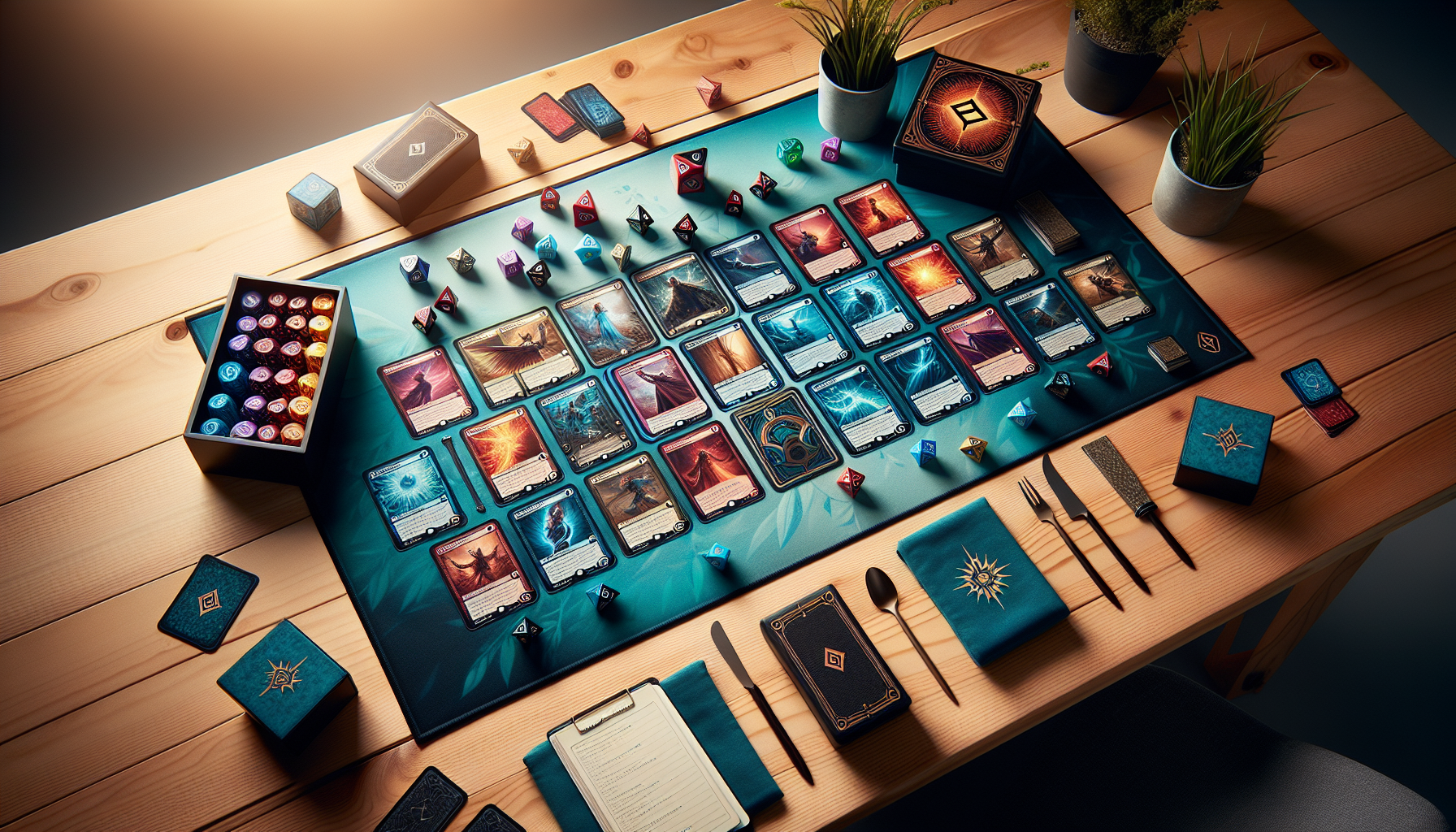
Genshin Impact Trading Card Game, also known as Genius Invokation TCG, might initially feel like a "regular" TCG – but the game's engine is different. Here, it's less about just playing strong cards and more about optimizing your choices each round: the right character active, the right dice remaining, and the right timing for reactions. For those googling "Genshin Impact card game," this is the foundation that makes everything else (rules, meta, and deckbuilding) understandable.
The Building Blocks of the Game: Cards, Dice, and Rounds
At its core, you control a team of three Character Cards and a deck of Action Cards (events, equipment, and supports). Each round, Elemental Dice are rolled, which are your resources – and this is where the game differs from classic TCGs where you often have mana/energy that ticks up automatically.
-
Character Cards: Have a Normal Attack, Skill, and often a Burst that requires Energy. "Charging" the right character at the right time is key to tempo.
-
Elemental Reactions: Reaction focus means damage and control often come from combinations (e.g., apply element → trigger reaction), not individual "bomb cards."
-
Summons: Callings that provide value over time (extra damage/effects between rounds). They reward planning and dice discipline.
-
Support: Permanent value engines that reduce costs, provide draws, or stabilize your dice – often best played early for long-term effect.
Unique perspective: think like in board games with action economy. Every die and every action should "buy" you more than it costs – either through extra tempo, better trades, or secured reactions.
A Simple Rule of Thumb for Winning Through Efficiency
Many guides talk about "strong teams" but miss why they win: they do more relevant things per round. Ask yourself: "Does this move give me an advantage now (tempo) or an advantage later (value engine) – and what dice am I sacrificing for it?" When you start thinking this way, both deck choices and match decisions become much easier to optimize.
Rules and Gameplay – How a Match Works (Step-by-Step)
A match in Genius Invokation TCG (Genshin Impact card game) might initially feel like "a lot to keep track of," but it follows a clear rhythm: choose three characters, roll Elemental Dice, spend them on actions, and win by defeating your opponent's characters. Top-ranked content usually focuses on turn order and dice – here, we'll break it down practically, with an extra focus on how to avoid common beginner mistakes and gain more control over the tempo.
Preparation: Characters, Deck, and a Simple Building Principle
Before the first round, you choose 3 characters and a deck that supports them. A stable beginner base is to balance card types so you can both develop the board and respond to threats:
-
Actions/Events for tempo: cheap cards that provide immediate effect (draw, damage push, repositioning).
-
Supports for long-term value: provide recurring resources/effects that make each round more efficient.
-
Equipment/Tools for power spikes: when your plan requires a character to "carry" the match.
A unique rule of thumb often missing in guides: build so you have something good to do even when the dice roll "wrong" (i.e., more flexible costs and fewer super-narrow combo requirements).
Round Structure, Actions, and Win Conditions – Plus a Round Checklist
Each round, you roll dice, can convert/reroll, and then take turns performing actions: normal attack, elemental skill, burst (requires energy), play cards, or switch active character. You win by defeating all three of your opponent's characters – but in practice, you often win on tempo: forcing bad trades and getting the "last word" in the round.
Common mistakes that reappear in top lists: bad swaps, over-investing dice in a turn, and playing cards "just because you can." Try this checklist per round:
-
Plan dice: which 1–2 actions must you be able to take? which can wait?
-
Assess threat level: can the opponent get a knockout next action (or after a reaction)?
-
Secure finishes/tempo: if you can create lethal next round – play for position and resources, not just damage now.
When to Play Aggressively – and When to Slow Down?
The aggro line is correct when you can chain elemental reactions and maintain pressure with cheaper actions. The control line is better when you have supports that scale and can win by "trading" dice more efficiently. The goal is to leave the opponent with an uncomfortable choice each round: waste dice on defense/swaps or fall behind in resources.
Section 3: Meta and Popular Decks – What's Strong Right Now (and Why)
The meta in Genius Invokation TCG shifts faster than many realize, not because individual cards are always "best," but because certain teams exploit dice efficiency, stable openings, and reliable finishes. Top-ranked content usually lists "best decks," but often misses why they win – and how you can beat them yourself with smart adaptation. Here, you'll get a map of the most common archetypes and the principles that make them strong in practice.
Common Archetypes You'll Encounter (and Their Gameplan)
-
Reaction burst (reaction and burst focus): Builds tempo by triggering elemental reactions often and quickly reaching energy/burst for a powerful "turn swing." The key is to plan attacks so you get both damage and energy generation in the same round.
-
Summon/control (summons and control): Plays out summons and support early to create "free" damage/value between actions. They often win by forcing the opponent to chase the board and fall behind in resources.
-
Freeze/lock (freeze lock): Aims to limit swaps and actions via statuses/reactions, allowing you to control who is active and when. Strong against "glass cannon" teams that need to swap often.
-
Quick swap (fast swaps): Utilizes cheap swaps to always have the right active character and minimize dice waste. Good at creating "turn order advantage" and forcing mistakes.
The point: the best teams aren't just strong on paper – they are consistent. They require fewer "perfect" dice rolls, have clear opening lines, and can win even when you draw averagely.
Adapt: Tech, Mulligan, and "Budget-Meta"
When you frequently encounter the top lists, you can gain a lot from small adjustments:
-
Tech cards for problems, not hype: Include answers to what actually beats you (e.g., handling summons or ways to disrupt supports).
-
Better mulligan: It's better to keep 1–2 starting cards that secure your rounds 1–2 than a "dream combination" that requires specific dice.
-
Budget-meta/anti-meta: Choose an archetype with a simple gameplan and high stability, and fill the last spots with flex cards that punish what your playgroup spams. Often, anti-meta is more valuable than the "strongest team" if you face the same opponents every night.
The meta tip rarely mentioned: measure your deck in dice per effect. If your deck often needs 3–4 "correct" dice to do something relevant, it will feel inconsistent – even if it looks brutal in highlights.
Section 4: Deckbuilding for Real – Build a Stable Deck from Scratch
Building a good deck in Genshin Impact TCG (Genius Invokation) is less about stacking "strong cards" and more about creating a consistent plan that works even when the dice don't go your way. Top-ranked content usually highlights synergy and clear win conditions – but often misses how to make the deck robust against bad draws and skewed elemental dice. Here's a practical model for building stably, whether you're aiming for reaction-burst, summon/control, or quick swap.
Core Principles for a Consistent Deck
-
Define your win condition: Will you win via a Burst-spike, gradual value with summons, or tempo lock with Freeze/Swaps? Everything in the deck should support that goal.
-
Build for dice efficiency: Choose cards that match your elements and minimize "dead" dice. Costs that often become "too expensive" in practice are a common reason why beginner decks fall apart.
-
Balance card types smartly: Supports provide long-term value (cards, dice, discounts), events provide tempo (surprises, answers), and equipment creates power spikes – but only if you can afford to play them without losing the round.
The unique key is to think like in a board game: each round you have a limited number of actions, and a deck often wins by "buying" more efficient actions through discounts, draws, and free swaps – not by chasing max damage every turn.
The 3-Layer Model: Build Like a Pro Deck (Without Overcomplicating It)
1) Core Combination (must-have cards): 6–10 cards that directly drive your plan (e.g., reaction engine, swap core, summon package).
2) Consistency Package: cards that make the deck more even: draw/filtering, dice fixing, cheap tempo plays. The goal is to be able to play "a good round" even with mediocre dice.
3) Meta Slots (flex/tech): 4–8 cards that are swapped out based on what you encounter: anti-summon, swap punishment, healing/defensive, or answers to popular supports.
Always finish with a mulligan plan: write down 3–5 "dream cards" in your starting hand for your archetype – it boosts your win rate more than a single "OP card."
Section 5: Game Tips to Win More Matches – Tactics, Dice, and Timing
Once you know the rules of Genshin Impact Trading Card Game (Genius Invokation TCG), it's usually not "stronger cards" that decide – but how you use your dice, your timing, and your positioning. Top-ranked content often returns to the same core: plan the round before taking your first action, and play for tempo (forcing your opponent into expensive answers). Here are the most practical tricks that will quickly boost your win rate.
Dice Management That Actually Wins Games
-
Plan around two colors, not three: Try to build rounds where you primarily need dice for your active character + a clear backup. The more elements you "require," the more you waste on conversion.
-
Convert with a goal: Swapping dice "just in case" is a classic beginner mistake. Only convert if it unlocks a specific game plan: skill → reaction → secured swap or burst next round.
-
Save when you're already ahead: If you have the board under control, a couple of saved dice (or a cheap action) can allow you to have the last word in the next round – a hidden tempo advantage that many guides mention but rarely concretize.
The unique aspect of Genius Invokation is that you often win by creating "inconvenient math problems": forcing an expensive swap, baiting a burst, or pushing for a reaction when the opponent lacks the correct element. Think in micro-plays: if you can get your opponent to spend 2–3 extra dice in a round, you've effectively bought yourself an extra action later in the match.
Timing, Swaps, and "Micro-Plays" You Can Practice Immediately
A simple workflow is to check three things each round: 1) Threat Assessment (what can you die from?), 2) Lethal Line (can you finish in 1–2 actions?), 3) Swap Cost (who do you really want active). Intentionally "taking a hit" on the right character can be correct if it allows you to retain dice for a decisive burst or a reaction chain. The more often you calculate damage in advance, the more you punish your opponent's bad swaps – and the fewer matches you lose due to pure timing.
Collect, Protect, and Organize – Essential TCG Accessories (Nerdbutiken.se Focus)
Once you've found a deck you like in Genshin Impact Trading Card Game (Genius Invokation TCG), the next step is to make playing smoother. Top-ranked content usually highlights "basic gear" like sleeves and deck boxes – but often misses why it actually affects your performance: good accessories save time between rounds, reduce wear and tear, and ensure you shuffle more evenly (which leads to more consistent hands over time). With the right TCG accessories, it also becomes easier to bring your cards to game nights, events, or just to a friend's place.
Accessories That Make the Biggest Difference (and Why)
-
Card Sleeves (standard + inner sleeves): Protect against scratches, bent corners, and "sticky shuffling." Inner sleeves ("perfect fit") + outer sleeves provide extra protection if you play frequently or want to keep collectible cards pristine.
-
Deck Boxes of the Right Size: Choose a box that holds a sleeved deck and preferably extra cards/"tech" options. A sturdy box reduces the risk of cards getting crushed in your bag.
-
Playmat: Provides better grip, reduces the risk of damage from the table surface, and makes it easier to keep track of characters, summons, and support cards during intense rounds.
-
Binder/Folio + Top Loaders: For those who collect or want to display favorites. Binder for organization, top loaders for extra valuable cards or signed promos (if you have them).
-
Dice Tray/Container: Elemental dice roll away – a tray reduces "mess" and makes rounds faster and more structured.
Many guides just say "buy sleeves," but here's a quick rule of thumb: if you play often and shuffle a lot, prioritize shuffle-feel (durable sleeves). If you mainly play at home and want to save money, a good standard sleeve and a simple box will go a long way.
Swedish Gaming Everyday: Pack Smart and Avoid Unnecessary Wear
A practical setup is "1 bag – 1 set": deck box + dice + tokens/markers + small note with your mulligan plan. This way, you don't have to search between matches and can focus on tempo and timing. At Nerdbutiken.se, it's easy to find the right categories of TCG accessories in Sweden – especially sleeves, deck boxes, and playmats that will make your Genshin deck last longer and feel better to play with.
Section 7: Community, Game Nights, and Next Steps – How to Keep the Interest Alive
Getting better at Genshin Impact Trading Card Game (Genius Invokation TCG) isn't just about knowing the rules – it's about playing many matches, encountering different styles, and getting feedback. Top-ranked content often emphasizes the same thing: you develop fastest when you test your deck against real opponents, not just against "perfect" scenarios. With an active community, it also becomes easier to keep up with the meta, find new decks, and maintain motivation over time.
Find the Right Community (and Play Smarter, Faster)
-
Local Game Stores & Game Nights: Look for open TCG nights where you can get matches without having to "arrange everything yourself." Bring an extra deck to lower the barrier for new players.
-
Discord/Reddit and Swedish Groups: Perfect for sharing decklists, discussing matchups, and getting quick answers on rules and "why am I losing to X?" Save threads with tech cards and mulligan tips.
-
Build a Small Test Pool: Have 2–3 "sparring" decks at home (e.g., an aggressive, a control, a quick swap). This allows you to practice against common archetypes even when no one else is online.
What many guides miss is that improvement also requires structure. For example, play best-of-3 against the same opponent and note after each match: (1) what was my plan, (2) when did I lose tempo, (3) which card was "dead" in hand? This way, you build your own meta understanding – adapted to your playgroup.
2-Week Training Plan for Beginners (Practical Setup)
Follow this to get up to speed quickly: Week 1: learn one deck (no major changes), practice dice planning and take short notes. Week 2: record 10 matches, adjust 3–5 cards for consistency, and add 1–2 tech cards against what you encounter most. The goal isn't "perfect meta" – but a deck you can confidently pilot and continuously improve.
Frequently Asked Questions (FAQ)
Q: Is Genshin Impact Trading Card Game (Genius Invokation TCG) a physical card game or only in-game?
A: The Genius Invokation TCG itself is fundamentally a card game you play inside Genshin Impact. Many search for "Genshin Impact card game" and expect booster packs, but the most important thing to know is that progression happens digitally. However, you can absolutely invest in physical TCG accessories (sleeves, deck box, playmat) to organize printed decklists, tokens, dice, or other collectible cards you play with alongside it.
Q: How do you usually win matches – what's the most common "win condition"?
A: The most common path to victory is to knock out all three opposing characters. In practice, this involves creating a tempo advantage through elemental reactions, clever swaps, and reaching a powerful Burst window first. Top players often plan 1–2 rounds ahead: build energy, threaten lethal, and force expensive defensive/swap moves from the opponent.
Q: What are the most common beginner mistakes in Genius Invokation?
A: Three classics often mentioned in guides are: making too many unnecessary swaps, burning dice early without a plan, and playing actions "on curve" instead of towards a clear round plan. A good remedy is to always ask: "Which character do I want to end the round with active – and why?"
Q: How does "mulligan" work and what should I look for in my starting hand?
A: Mulligan is your chance to seek consistency. Often keep 1–2 cards that provide a stable start: an early support (value generator), an inexpensive tempo event, or a card that fixes dice/draws. Avoid getting stuck with too many expensive or situational cards – especially if your deck requires quick setup (e.g., quick swap).
Q: How can I adapt to the meta without changing my entire deck?
A: Think "tech slots." Replace 2–4 cards with ones that counter what you encounter most: tools against summons/control, protection against burst, or cards that improve your dice efficiency. Often, small adjustments plus better mulligan are enough to turn difficult matchups around.
Q: Which accessories are most worthwhile to buy in Sweden (e.g., via Nerdbutiken.se)?
A: Prioritize card sleeves (preferably inner + standard) for feel and durability, a deck box that holds multiple decks, and a playmat for less wear and a clearer "board state." If you collect: a binder/folios and top loaders for extra protection. This makes game nights and travel much smoother.
Q: How can I quickly get better if I want to improve in two weeks?
A: Choose one archetype and play only that for 10–20 matches. Week 1: learn dice planning and standard lines (when to swap, when to save dice). Week 2: note which rounds you lose tempo and adjust 3–5 cards in your deck. Combine with brief notes after each match: "What was my plan, and when did it fall apart?" This leads to the fastest development.
Next steps: play smarter, build more consistently, and keep your cards in top condition
Genshin Impact Trading Card Game (Genius Invokation TCG) rewards not only "strong cards," but planning: a clear win condition, consistent deckbuilding, and discipline in dice management. When you can read tempo (when to push, when to slow down), time burst/energy, and utilize elemental reactions effectively, matches become both more balanced and more fun. The big key that many guides miss is the overall picture: good micro-decisions each round often beat a "perfect" list that is played carelessly.
Choose an archetype you like (e.g., reaction burst, summon/control, or quick swap), build with consistency in mind (draw, filtering, and flexible slots), and play 10 matches where you adjust one thing at a time. If you want to make playing smoother in everyday Swedish life: invest in card sleeves, a sturdy deck box, and a playmat that protects both cards and the table. Feel free to check out Nerdbutiken.se for accessories that make it easier to bring your deck to game nights and keep your collection fresh over time.