


Warhammer Cosplay with Nerdbutiken.se – your complete guide
Do you dream of stepping straight into the Warhammer universe as a massive Space Marine, a zealous Sister of Battle, or a mighty Stormcast Eternal – but don't know where to start? Warhammer cosplay, whether it's Warhammer 40K cosplay or Age of Sigmar cosplay, can feel overwhelming with all the armor, weapons, and details. You're far from alone in wondering: what materials are needed, how do you achieve the right "grimdark" feel, and where do you find the supplies in Sweden?
In this guide, you'll get a clear path from idea to finished costume. With Nerdbutiken.se as a guiding thread, we'll go through planning, material selection, building, painting, and how to best showcase your cosplay at conventions and on social media. You'll get concrete examples, product inspiration, and step-by-step thinking to help you create a Warhammer costume that is both durable and impressive.
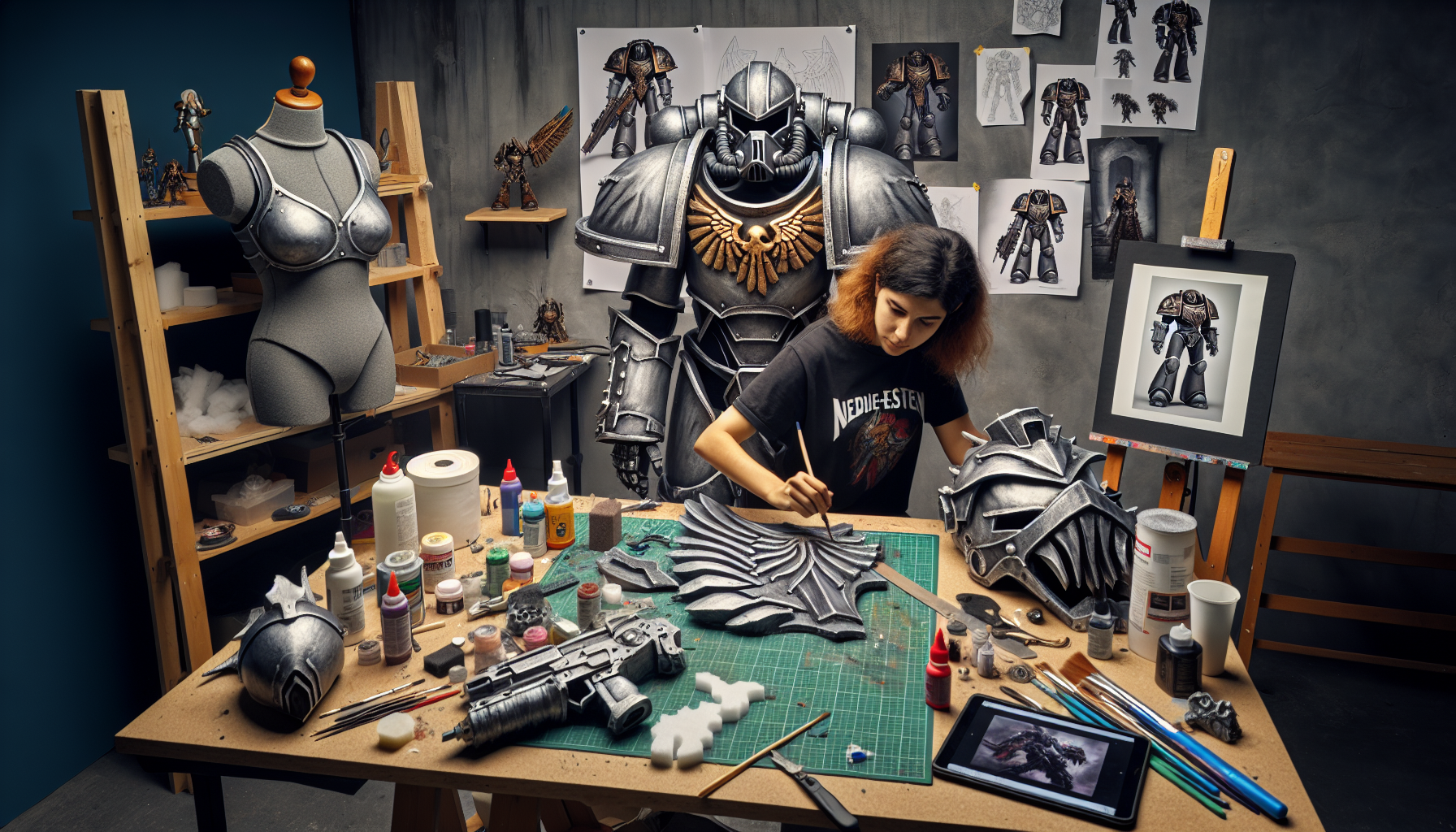
Warhammer cosplay is about stepping straight into Games Workshop's dark, epic worlds and transforming miniatures, artwork, and lore into full-scale costumes. Compared to many other cosplay themes, Warhammer 40K cosplay and Age of Sigmar cosplay are extremely visually powerful: massive armor, grotesque mutations, sacred iconography, and a distinct "grimdark" feel that is immediately recognizable at Swedish conventions.
Warhammer 40K and Age of Sigmar – two different grimdark worlds
To understand Warhammer cosplay, you first need to be familiar with the two main universes:
-
Warhammer 40K: A sci-fi universe filled with Space Marines, Chaos Space Marines, Sisters of Battle, Orks, Tyranids, and many more. Here, power armor, massive weapons, and Gothic ecclesiastical aesthetics dominate.
-
Warhammer Age of Sigmar: A more high-fantasy world with Stormcast Eternals, Chaos Warriors, Skaven, elves, orruks, etc. Here you'll see more medieval-inspired armor, magical details, and demonic elements.
A unique advantage of Warhammer cosplay is that you can work directly from miniatures and color schemes found at, for example, Nerdbutiken.se, and translate them almost "one-to-one" to your costume. Many Swedish cosplayers actually start as miniature painters or players and let their favorite army become their next big armor project.
How to choose the right faction and character for your first Warhammer Cosplay
When choosing what to cosplay, think both practically and aesthetically:
-
Body type and comfort: A tall, strong cosplayer can enhance their silhouette with Space Marine armor, while a more agile body type might be well-suited as a Sister of Battle, Inquisitor, or Skaven-assassin.
-
Budget and difficulty: A full power armor (e.g., Primaris Space Marine) requires more foam, tools, and time. A simpler Imperial Guard, Cultist, or Chaos Warrior can be made with modified clothing, light armor, and fewer props.
-
Experience level: Are you a beginner? Start with a faction where much can be solved with fabric, a cloak, simpler shoulder pads, and a single iconic prop – e.g., an Inquisitor with a coat and a cool weapon.
Warhammer cosplay particularly attracts gamers, hobby builders, and miniature painters because it combines all their interests: building, painting, gaming, and storytelling. By using figures, books, and paints from Nerdbutiken.se, you also get concrete references that make it easier to create a cosplay that feels authentic – not just for you, but also for other Warhammer fans at the next convention.
Getting started with Warhammer Cosplay – planning, research, and budget
Getting started with Warhammer cosplay is less about talent and more about smart planning. The most successful costumes at conventions in Sweden are almost always those based on clear research, a realistic budget, and a well-thought-out timeline – not necessarily the most advanced projects. Here we go through how to lay a stable foundation so that your first (or next) Warhammer 40K or Age of Sigmar cosplay is both feasible and fun to create.
Step 1: Choose a faction and character that suits you
When choosing what to cosplay, think with both your heart and your head:
- Choose by difficulty level:
- Beginners: simpler uniforms like Imperial Guard, cultists, or a Chaos robe.
- More experienced builders: medium-heavy armor, e.g., Sisters of Battle or Stormcast Eternals.
- Adapt to body type and comfort:
- Tall people often suit Space Marines or Chaos Warriors well.
- Do you want to move agilely? Opt for a lighter costume with fewer armor plates.
-
Consider transport and storage: A full-scale Space Marine requires a car and storage, while an Inquisitor or Necromunda character is significantly easier to travel with.
Use figures, codices, and product images from Nerdbutiken.se to visually compare different factions. Ask questions like: "How many large parts do I need to build?" and "Can I sit down in this design?" before deciding.
Steps 2 & 3: Do smart research and set a sustainable budget
Good research saves both money and frustration. Start with:
- Official material: codices, artwork, covers, and painted armies provide clear color and shape references.
- Web shop and painting guides: use Warhammer figures at Nerdbutiken.se as "3D concept art" – zoom in on details, insignias, and weathering.
-
Community and tutorials: supplement with YouTube guides on foam, 3D printing, and armor building.
Then set a budget divided into categories:
- Materials: EVA foam, fabric, glue, paint, any 3D-printed parts.
- Tools and safety: utility knives, heat gun, mask, safety glasses.
-
Convention costs: travel, accommodation, extra bag or box for transport.
A concrete approach could be to start with a simpler Imperial Guard cosplay for a few hundred kronor, and only then plan a larger Space Marine power armor project with a higher budget and longer timeline. Divide the build into sub-goals (helmet, breastplate, weapon) and include buffer weeks before conventions – this is where the most experienced cosplayers differ from the rest. A clear plan ensures you actually finish, instead of getting stuck halfway.
Materials and tools for Warhammer Cosplay – what you need and where to find it
The right materials and tools are the difference between a stressful, expensive cosplay and a stable, fun project. In this section, we go through what you actually need to build a believable Warhammer 40K cosplay or Age of Sigmar cosplay, and how you can use the range at Nerdbutiken.se as a hub for both colors, references, and details.
Basic materials for armor and props
-
EVA foam & craft foam: The base for most armor. EVA (5–10 mm) for larger armor plates, thinner craft foam for details and edges.
-
Worbla and plastic: Thermoplastic for extra durable parts, e.g., helmet trim, weapon muzzles, or symbols.
-
Textiles & faux leather: Cloaks, tabards, belts, bandoliers, and holsters to break up all the hard armor.
-
Props & details: Lightweight plastic weapons, 3D-printed sigils, chains, rivets, and "gribbly bits" that give it the Warhammer feel.
A good working method is to build the main part of the armor from cheaper EVA foam, and reserve Worbla and 3D printing for exposed, visible details. This provides both lower weight and a more forgiving work surface if you need to redo something.
Tools, paint, and how to use Nerdbutiken.se as a hub
-
Cutting tools & shaping: Sharp utility knives, box cutter, heat gun, and possibly a Dremel for shaping edges and battle damage.
-
Adhesive & assembly: Contact adhesive for strong foam joints, hot glue gun for quick "spot fixes," as well as Velcro, straps, and buckles for the carrying system.
-
Painting equipment: Brushes, sponges, primer, and acrylic paints. Here you can mirror color schemes from Citadel and Vallejo paints at Nerdbutiken.se.
-
Warhammer figures as reference: Buy a single Space Marine or Stormcast box just to have a physical color and detail reference when building your armor.
-
Small accessories: Official pins, keychains, insignias, and badge sets from Nerdbutiken.se can be incorporated as genuine, licensed details on your cosplay.
By documenting which color codes and techniques you use (e.g., "Ultramarines Blue + Nuln Oil-like wash"), you can easily repair, upgrade, and expand your cosplay over time. This way, each future project becomes cheaper, faster – and visually consistent within your chosen Warhammer universe.
Building Warhammer armor and props – step-by-step strategy
Building your own Warhammer armor is what truly transforms your idea into a massive, "grimdark" presence on the floor at the next convention. Many online guides rush this part, or skip critical moments like fit and test assembly. In this section, we break down the process into clear steps, focusing on how to actually make a Space Marine or Stormcast armor work in reality – not just look good in pictures.
Plan the armor as a system, not as loose parts
Start by thinking of the armor as a cohesive system rather than individual pieces:
-
Divide the body: helmet, breastplate, back, shoulders, arms, thighs, shins, shoes/stilts, weapons, and back details (e.g., Space Marine backpack).
-
Scale up from miniature: use height and shoulder width as a base. Many cosplayers enlarge 40K armor by about 20–30% beyond the body's actual volume to achieve that "superhuman" feeling.
-
Make paper or cardboard prototypes: tape together simple mock-ups before you even touch EVA foam – it saves both money and frustration.
Once you have a functional basic shape, you can start adding iconic elements: trim, purity seals, rivets, and faction symbols. Here, Nerdbutiken.se is valuable – use the miniatures as a 3D reference when placing details on the breastplate, shoulders, and helmet.
Foam construction, weapons, and secure assembly
Foam is standard for Warhammer cosplay because it's lightweight, safe, and forgiving:
-
Cut and shape correctly: use sharp utility knives, bevel cuts, and a heat gun to round edges and create volume. Test fit each piece with painter's tape before gluing.
-
Glue smartly: contact adhesive for all load-bearing joints, hot glue gun for smaller details. Reinforce critical points (shoulders, hips, hanging parts) with straps, quick-release buckles, and sometimes Velcro.
-
Build iconic weapons as props: bolter, chainsword, or storm shield from foam and PVC pipes. Keep everything lightweight and without sharp edges – most Swedish conventions have clear safety rules for weapon replicas.
A concrete trick many miss is to build the armor modularly. Make shoulders, chest, and back as separate units that connect to an internal harness (e.g., a cheap climbing harness or modified vest). Then you can remove parts during breaks without having to take everything off. Also, save all the templates you make; with the same basic shape, you can later build a new faction – just by changing details, symbols, and color scheme, preferably inspired by the assortment and product images at Nerdbutiken.se.
Painting, weathering, and details – making your Warhammer cosplay look "grimdark"
The paint job often determines whether your Warhammer cosplay feels like a flimsy costume or heavy, battle-hardened power armor straight out of the 41st millennium. By borrowing techniques from miniature painting – something many Warhammer players already know – you can create a "grimdark" finish that closely resembles official artwork and painted armies you see at Nerdbutiken.se.
From base coat to shadows and highlights
-
Primer and base colors: Use a good primer (black, gray, or white depending on the scheme). Then choose base colors that match your faction, e.g., Ultramarines blue, Black Legion black/gold, or Space Wolves gray/blue.
-
Miniature painting on a large scale: Translate classic techniques like dry-brushing, washes, and layering from miniatures to foam and plastic. The same Citadel or Vallejo paints you find at Nerdbutiken.se can be thinned down and used on your armor for a consistent look with the army you play.
-
Practical test surface: Always paint a scrap piece of foam first to see how colors and effects behave before tackling the entire breastplate.
By thinking "like when I paint a 28mm Space Marine, but enlarged," it becomes much easier to understand where to place shadows, highlights, and where the armor would naturally show the most wear – edges, knees, shoulders, and weapons. Look at product images and painting guides at Nerdbutiken.se to replicate the exact same color placements.
Weathering, battle damage, and small details that make all the difference
To achieve the right Warhammer 40K or Age of Sigmar feel, your cosplay needs to look like it has seen hundreds of battles:
-
Weathering and damage: Use sponge technique and dry-brushing with silver for edge chipping. Create rust with orange/brown washes, soot around vents and barrels with black pigment or airbrush, and controlled blood spatters with dark red spatter over weapons and lower parts.
-
Decals and symbols: Add chapter icons, legion sigils, purity seals, scripture scrolls, and inquisitorial symbols. You can write small texts with a thin brush or fine marker, and be inspired by the small decals on figure boxes at Nerdbutiken.se.
-
Lights and electronics: Inexpensive LED lights in eyes, power hammers, or energy reactors immediately give a premium feel. Remember to hide battery packs inside and make them accessible for changing.
Always finish by stepping back a few meters from your cosplay and assessing the overall look. "Does it look like a work of art on a table, or a soldier on the battlefield?" The goal of a Warhammer cosplay is almost always the latter – dirty, worn, iconic, and full of stories. When you combine the right colors from Nerdbutiken.se with clever weathering and thoughtful details, you get armor that looks like it belongs in the Imperium's bloodiest war zones.
Clothing, under-suit, and comfort – how to wear a heavy Warhammer cosplay all day
One of the biggest challenges with Warhammer cosplay – especially massive Space Marines, Chaos Warriors, or Stormcast Eternals – is not the build itself, but being able to wear the costume for an entire convention day. Many guides online fall short here, but comfort, mobility, and safety are crucial if you want to enjoy the cosplay instead of just suffering through it.
Base layer and protection – the foundation for comfortable armor
For your Warhammer 40K or Age of Sigmar cosplay to work in practice, you need to think "inside out":
-
Moisture-wicking underwear: Performance wear, sports t-shirts, and tights that keep you dry under EVA foam and plastic.
-
Black base suit: A black morphsuit, overall, or work coverall provides a neutral background between armor parts and perfectly suits the Warhammer aesthetic.
-
Shoes and protection: Sturdy, broken-in boots, as well as discreet knee, elbow, and back protectors under the costume to relieve weight.
Think of the cosplay as a modular "rig": first comfort layers, then support (harnesses, belts), last the visible armor plates. Many experienced cosplayers attach breastplate and back pieces to an old hiking backpack to shift weight from shoulders to hips – something you can calmly test at home before the premiere.
Weight distribution, ventilation, and smart breaks
Once the armor is in place, it's all about distributing weight and creating airflow:
-
Harness/rig under the breastplate: Use a climbing harness, military vest, or modified backpack with padded shoulder straps and a waist belt.
-
Adjustable straps and quick-release buckles: Make it easy to quickly remove helmet, shoulder pads, or back piece between photo sessions.
-
Ventilation openings: Small openings at the back, side of the thighs, or under the helmet's brim make an enormous difference in heat.
Always test your complete Warhammer cosplay at home for at least 1–2 hours: walk stairs, sit down, stand up, pose with weapons. Have a small "survival kit" in your bag at conventions – gaffer tape, super glue, needle and thread, spare strap – so you can quickly fix damage. Also plan your water breaks and sitting breaks in your schedule. An impressive Space Marine or Ork who still looks lively in the afternoon always gets more attention than one who is forced to give up after two hours. By building for comfort from the start, you extend both the costume's lifespan and your own cosplay enjoyment.
Show off your Warhammer Cosplay – conventions, photoshoots, and community at Nerdbutiken.se
Once your Warhammer cosplay is finally finished, the next step is to actually show it off – and here a whole new world of conventions, photoshoots, and community building opens up. The most appreciated online guides emphasize that the on-site experience itself is at least as important as the build, both for motivation and for developing as a cosplayer.
Where you can show off your Warhammer cosplay in Sweden
-
Swedish conventions and gaming events: Sci-fi fairs, gaming conventions, and miniature wargaming tournaments are perfect venues for Warhammer cosplay. Keep an eye on events where Warhammer 40K and Age of Sigmar are played – the community is often particularly enthusiastic about cosplay there.
-
Store events and competitions: Physical store events and campaigns from retailers like Nerdbutiken.se (online or via pop-ups) are golden opportunities for thematic Warhammer costumes, especially during new army or codex launches.
-
Planned photoshoots: Industrial environments, concrete, forests, and ruins automatically provide the right grimdark feel. Book a photographer or collaborate with other cosplayers for group photos (e.g., a full Space Marine squad).
By combining conventions, smaller local meetups, and your own photo sessions, you'll get both material for social media and valuable feedback on your costume. This is also where you can test how comfortable the armor actually is for a full day.
Build your cosplay identity and use the community
To get the most out of your Warhammer cosplay, it's smart to think long-term:
-
Create a clear online presence: Start a dedicated Instagram or TikTok account for your cosplay projects. Use relevant hashtags like #warhammercosplay, #warhammer40k and tag @nerdbutiken.se when you use paints, miniatures, or items from them as a reference.
-
Prepare a short character presentation: Before competitions or stage appearances, have 20–30 seconds ready where you present your character, faction, and an iconic Warhammer line. This shows both passion and lore knowledge.
-
Network smartly on-site: Exchange contact information via business cards or QR codes to your social media. Ask other cosplayers for group photos – e.g., Space Marines vs. Chaos, or an Inquisition team with different roles.
By actively sharing your progress, using Nerdbutiken.se as a hub for upgrades (new insignia, alternative color schemes, extra weapons), and participating in the community, you're not just building a costume – you're building a name in the Swedish Warhammer scene. This is where your cosplay stops being a one-off project and instead becomes a living, growing hobby.
Frequently Asked Questions About Warhammer Cosplay
Q: How do I start Warhammer cosplay if I've never built a cosplay before?
A: Start small and focused. Choose a relatively simple faction, such as the Imperial Guard, simpler Chaos cultists, or a Skaven with mostly fabric and few armor parts. Break the project down into three steps: 1) choose a character and gather reference images (miniatures and books from Nerdbutiken.se are perfect), 2) make a simple material list with foam, paint, and glue, 3) set a timeline where you allocate a few hours a week. The goal with your first Warhammer cosplay should be to finish it, not to build a Golden Demon-level piece right away.
Q: How "screen accurate" does a Warhammer cosplay need to be to work at conventions?
A: Most Swedish conventions value overall impression and safety more than 100% lore-accurate detail. Keep colors, symbols, and silhouette close to the original – here, miniatures from Nerdbutiken.se are an excellent guide. At the same time, it's perfectly fine to adjust proportions, simplify details, or make your own DIY interpretation of your Space Marine chapter or Stormcast chamber. Feel free to say your figure is a "homebrew chapter" or "custom warband" if you mix the design.
Q: How much does it cost to build a Warhammer 40K or Age of Sigmar cosplay?
A: The cost mostly depends on size, level of detail, and tools you already have. As a rule of thumb:
-
Simpler costume (Imperial Guard, cultist, simpler mage): approx. 800–1,500 SEK
-
Mid-range armor (Chaos Warrior, Stormcast with few large plates): approx. 1,500–3,000 SEK
-
Large power armor (Space Marine, Chaos Space Marine): often 3,000–6,000 SEK or more
Much of the budget goes to foam, paint (e.g., Citadel/Vallejo from Nerdbutiken.se), glue, and basic tools. Start with a smaller costume to learn techniques more cheaply.
Q: Can I use Warhammer miniature painting guides for cosplay?
A: Yes, and it's one of the most underestimated tricks. Color guides and "paint schemes" for armies – which you'll find in codexes and on product images at Nerdbutiken.se – can be directly translated to large-scale armor. Use the same base colors, highlights, and washes, but with acrylic paint for cosplay. Techniques like drybrushing and edge highlights work just as well on EVA foam as on plastic miniatures, just on a larger scale.
Q: How do I make my Warhammer cosplay comfortable enough to wear all day?
A: The secret is to plan for comfort already in the design phase:
-
Undergarments: moisture-wicking layers and good shoes
-
Weight distribution: harness/rig under chest plate, straps crossed over back and hips
-
Ventilation: leave hidden air gaps, make helmet and shoulder plates easily removable
-
Break strategy: decide in advance when you'll remove parts, drink water, and rest
Test the entire cosplay at home for at least 1–2 hours before the convention so you have time to adjust straps, reinforce joints, and find pressure points well in advance.
Q: Where can I find community and events for Warhammer cosplay in Sweden?
A: Combine the cosplay and Warhammer scenes. Visit large gaming and nerd conventions, local game stores, and online groups on Facebook, Discord, and Instagram. Follow and tag Nerdbutiken.se when you post WIP pictures and finished photoshoots – many stores are happy to highlight customer projects and announce events, competitions, and photo days. You can also suggest group cosplay with the same faction (e.g., a full Space Marine squad) which looks impressive and strengthens camaraderie.
Conclusion: From the Miniature Table to the Convention Floor – Your Warhammer Journey Begins Now
You have now completed the entire journey from choosing a faction and planning your first Warhammer cosplay, through materials, construction, painting, and weathering, to comfort, posing, and how to showcase your costume at conventions. Together, these steps show how powerful the Warhammer hobby becomes when miniature painting, lore, and cosplay are interwoven – especially when you use resources like Nerdbutiken.se for paints, reference models, accessories, and inspiration.
The next step is simple: choose a moderately sized first project, set a realistic timeline, and write down a simple shopping list. Start with a helmet, a shoulder pad, or a weapon – not the entire armor at once. Use the assortment at Nerdbutiken.se to find the right paints, figures, and details, document your progress, and dare to ask the community for feedback. The more you build, paint, and test, the faster you will develop. The most important thing is not perfection, but actually starting – so take the first step towards your own Warhammer 40K or Age of Sigmar cosplay today.