


Storage & Protection of Collectibles – How to Preserve Value with Nerdbutiken.se
Do you have shelves full of collector's figures, Pokémon cards, retro games, or limited edition boxes and are starting to worry about dust, sun fading, or damaged packaging? Then the right storage and protection of collectibles is not just a detail – it is crucial for both value and collecting pleasure. With well-thought-out protection solutions from a niche geek store like Nerdbutiken.se, you can significantly extend the lifespan of your favorites.
In this guide, we will go through step-by-step how to protect everything from Funko Pop, TCG cards, and retro games to posters and collector's boxes. You will get concrete tips, common mistakes to avoid, and practical examples of smart home storage. The goal is to help you build a system that both looks good and preserves the condition of your collection, so that your items continue to be just as valuable – and enjoyable – for many years to come.
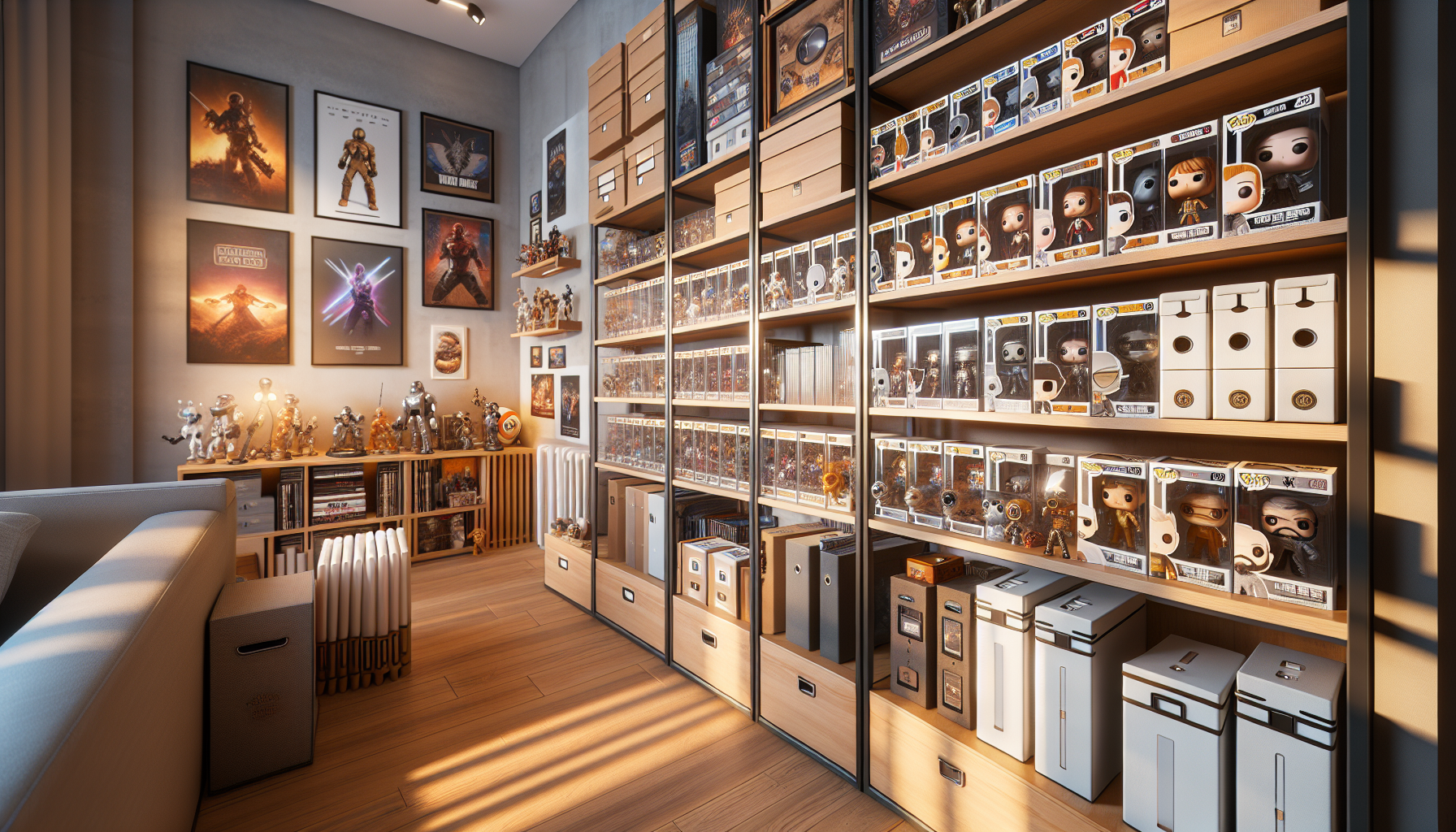
Owning collectibles is not just about "having" things – it's about preserving memories, value, and the feeling of a complete collection. Whether you collect Funko Pop, Pokémon cards, retro games, or limited edition boxes, proper storage and protection are absolutely essential for both condition and resale value. This is where the foundation is laid: if you make mistakes from the start, the damage can be permanent and the value can plummet quickly.
How condition affects value and collecting pleasure
Many geek collectors underestimate how quickly wear and tear occurs in a normal home:
-
Scratches, dents, and corner damage: occurs when items are too close together, stacked incorrectly, or moved without protection
-
Sun fading and discoloration: boxes, covers, and figure colors are destroyed by direct sunlight and UV light
-
Moisture and mold damage: typical for collections stored in basements, attics, or unheated storage rooms
-
Deformed boxes: too tight shelves, heavy stacks, or the wrong type of plastic bags can crush original packaging
The difference in value between a "mint in box" figure with an undamaged box and a loose, worn figure without packaging can be several hundred – sometimes thousands – of kronor. But it's not just about money. A clean, structured, and well-protected collection also provides more collecting pleasure, is easier to display, and feels more "real".
Why specialized protection is worth the investment
A common myth is that "a shelf and some plastic bags are enough." Looking at how professional collectors, grading companies, and auction houses work, it becomes clear that specially adapted protective products are the standard, not a luxury. The right sleeves, display cases, box protectors, and binders are developed to minimize wear and tear, UV exposure, and moisture risk for specific geek collectibles.
Here, a niche online geek store like Nerdbutiken.se plays an important role: as a specialist in protection and storage for collectibles, it can guide you to solutions that suit different types of figures, cards, games, and boxes – so you avoid costly mistakes and instead build a protection system that will last for many years to come.
Storage of Collector's Figures and Statues – From Funko Pop to Premium Statues
Collector's figures – whether Funko Pop, anime figures, Marvel statues, or limited resin pieces – are among the first things to get damaged if they are misplaced in the home. Dust, sunlight, and accidental bumps are the most common culprits, but many guides miss how small details in storage and protection can determine whether a figure maintains "mint" condition or slowly loses both color and shape.
The right type of display and protection for different figures
For your figures to survive both everyday life and moves, you need to combine attractive display with functional protection:
-
Display cases and acrylic cubes: Transparent protection that minimizes dust and protects against curious hands, perfect for, for example, Funko Pop and smaller PVC figures.
-
Display cabinets with doors: Provides an extra layer of dust protection and the ability to control lighting, ideal for more expensive statues and larger collector's figures.<
-
Storage boxes for storage: Acid-free boxes or sturdy plastic boxes with inserts for figures you don't want on display but still want to keep in collector's condition.
-
Stable shelving systems: Shelves with a high maximum weight, preferably with the possibility of mounting anti-tip protection against the wall to prevent collapse.
A smart setup is to have "A-shelves" for your favorite figures in nice displays and "B-storage" in boxes for the rest. This way, you get both an overview and long-term protection without filling every surface with items.
Checklist: how to avoid common damage to figures
Finally, there are some basic rules that serious collectors follow but are rarely clearly explained:
-
Never place figures directly in windows – UV light fades colors and boxes faster than you think.
-
Use anti-slip mats or adhesive putty on shelves to prevent figures from sliding or falling when bumped.
-
Leave air between figures so they don't touch each other; contact points can cause paint wear and pressure damage.
-
Save original boxes and place them in protective bags or box protectors – they dramatically affect resale value.
By viewing your shelves as a combination of exhibition and safety zone – rather than just storage – you can build a geek room where both inexpensive Funko Pop and expensive premium statues retain their condition, detail, and value for many years to come.
Protection of Collectible Cards and TCG – Pokémon, Magic, Yu-Gi-Oh! etc.
Collectible cards and TCG (Trading Card Games) are among the most sensitive collectibles – the slightest misstep in storage can directly show in corners, edges, and surface. For those who collect Pokémon, Magic: The Gathering, or Yu-Gi-Oh!, the right card protection and storage solutions are crucial for both playing enjoyment and resale value. Here, we go through a structured level model for protection that top articles often mention, but with more practical examples and concrete recommendations.
Basic protection: sleeves, toploaders, and deck boxes
Always start with multi-layer protection for your most important cards:
-
Soft sleeves (penny sleeves): The first step for all cards – reduces the risk of scratches, dirt, and "white edges" when cards are handled.
-
Toploaders and magnetic holders: For valuable or grading-worthy cards. Provides stiffness so the card doesn't bend during transport or storage.
-
Deck boxes for play and collectible cards: Hard or semi-hard cases that protect sleeved cards in everyday use, e.g., FNM, prerelease, or kitchen table games.
An effective setup is: card in inner sleeve, then in penny sleeve, then in toploader or magnetic holder. For playing cards that are not collectibles, you can settle for good sleeves and a sturdy deck box. Niche geek stores like Nerdbutiken.se usually clearly mark products for different card formats (standard, Japanese, small cards), which reduces the risk of accidentally buying the wrong size.
Long-term storage, climate, and smart organization
Once the cards are individually protected, it's all about long-term storage and order. Many guides fall short here, so follow these principles:
-
Collector's binders with the right pocket size: Choose acid-free, PVC-free pages. Insert cards with the opening facing sideways for better dust and moisture protection.
-
Storage boxes for bulk and complete sets: Use dedicated cardboard or plastic boxes for TCG, not shoe boxes or moving boxes that press and bend the cards.
-
Avoid rubber bands and overstuffed boxes: Rubber bands create permanent marks, and too tight boxes cause bowed cards over time.
-
Climate control at home: Do not store cards in basements, attics, or storage rooms with large temperature and humidity fluctuations. Opt for a dry room in the dwelling, preferably in a wardrobe or on a shelf away from exterior walls.
A concrete example: If you have an expensive Pokémon card (e.g., an alt art or vintage holo), protect it step by step with an inner sleeve + penny sleeve + magnetic holder, then in a padded box in a dry, dark place. By combining individual protection, smart boxes, and the right indoor climate, you can preserve both emotional memories and market value for many years – and specialized geek stores online make it easy to find exactly the protective products that match your collection.
Retro Games, Consoles, and Game Cases – How to Preserve Nostalgic Value
Retro games are more than just plastic and circuit boards – they are memories of childhood weekends, LAN nights, and couch co-op. That's why it hurts so much when an SNES case cracks, a cover fades in the sun, or a disc gets a scratch that can't be polished away. This section covers how to protect games, boxes, and consoles in a way that preserves both nostalgic value and resale value – whether you have a few favorites or an entire retro gaming room.
Strategies for protecting boxes, cases, and game media
To maximize the lifespan of your retro games, you need to think in three levels: outer packaging, cases, and the game itself:
-
Boxes for NES, SNES, Game Boy, etc.: Use rigid plastic protectors or protective bags of the correct size so that the corners are not crushed. Never put original boxes loosely in moving boxes without support.
-
Plastic cases for PlayStation, Xbox, Switch: Store them standing like books to avoid cracks. Do not pack the shelf too tightly – pressure creates cracked spines.
-
Cartridges, discs, and motherboards: Store cartridges in original cases or special boxes. Discs should always be in cases – never loose in piles or on the desk.
Combine this with simple routines: wipe shelves regularly, check that no cases are squeezed, and use protective cases from a geek store that has custom-sized solutions for different formats.
Climate, organization, and practical retro game storage at home
Many guides mention dust and scratches, but overlook the environment where the games are actually stored. Avoid basements, attics, and storage rooms with large temperature and humidity fluctuations. Aim for a dry, relatively cool room, preferably the same type of environment where you would store books or collectible cards. For extra sensitive collector's editions, you can use airtight plastic boxes with silica gel packets.
Build your retro game collection room by room: have a game shelf with the titles you play often and a more protected archive storage with plastic boxes and box protectors for rare or expensive games. Label the boxes clearly by console (e.g., "NES – complete boxes", "PS1 – RPG") so you can quickly find the right one without rummaging around. In this way, you combine visual nostalgia on the shelf with secure long-term storage – something many underestimate, but which makes a huge difference over 5–10 years.
Protection of Collector's Boxes, Limited Editions, and Memorabilia
Collector's boxes, limited editions, and exclusive memorabilia are often the highlights of a geek collection – but also what gets damaged fastest if storage fails. Outer boxes get scratched, corners get pushed in, steelbooks get micro-scratches, and inner contents start to rattle. To preserve both economic value and that magical "unboxing" feeling, thoughtful protection is required, not just placing the box on a shelf. Here, custom solutions, like those you find through a niche store like Nerdbutiken.se, can make a huge difference.
The right protection for boxes, steelbooks, and exclusive content
Start by securing the outer shell – it's usually what gets damaged first:
-
Plastic protectors for outer boxes: Hard or semi-rigid plastic protectors that enclose the entire box and protect against scratches, pressure damage, and dust.
-
Protection for steelbooks: Thin, clear cases around steel boxes that prevent scratches and color wear without obscuring the artwork.
-
Separate storage of contents: Artbooks, posters, coins, pins, and certificates can advantageously be placed in acid-free plastic sleeves or small boxes inside the main box.
A smart approach is to think in two levels: one protection for the collector's box itself, and one protection for everything inside. Many collectors leave the original inserts in place but supplement with extra protection for small parts so they don't roll around and rub against the inside. Labeled inner bags also make it much easier to put everything back correctly if you want to show off the box to a friend – without risking chaos in the packaging.
Long-term storage and organization of multiple special editions
When you have more Collector's Editions than you have shelf space, you need to think more like an archive than a regular bookshelf. Some proven strategies:
-
Sturdy storage boxes: Cardboard or plastic storage boxes where the boxes can stand upright, slightly separated, without being squeezed together.
-
Vertical storage: Place collector's boxes like books, not in stacks – stacks crush corners over time.
-
Clear labeling: Label boxes with title, platform, and year, and preferably have a simple inventory list in, for example, Google Sheets.
One unique detail many miss is the climate around the boxes. Do not store expensive limited editions in unheated storage rooms or damp basements. Temperature fluctuations can cause glue to come loose, plastic to become brittle, and printed covers to buckle. Instead, choose a dry, relatively cool indoor space – a wardrobe or a storage room in the apartment is often better than the attic. With the combination of custom plastic protectors, well-thought-out boxes, and simple cataloging, you can build a professional system that both protects your most exclusive editions and makes them easy to find when you want to enjoy your collection.
Posters, Prints, and Art – Smart Wall Storage for Collectors
Posters, art prints, and limited prints are often the heart of a geek room – but they are also among the most vulnerable collectibles. Creases, sun fading, moisture stains, and edge damage can destroy both emotional and economic value in just a few months. Therefore, thoughtful storage and protection of posters is at least as important as hard plastic protectors for cards or figures in display cases.
The right protection: frames, binders, and tubes – when to use what?
To extend the life of your posters and prints, you should combine different types of protection:
-
Frame with UV-protective glass or acrylic: Drastically reduces the risk of sun fading and protects against dust and touch.
-
Acid-free binders and portfolios: Perfect for signed prints, numbered art prints, and motifs you rotate on the wall.
-
Poster tubes in hard plastic: Good for shorter transport, but not optimal for long-term storage as the paper is kept rolled.
-
Passepartout and archival quality backing board: Prevents the motif from "sticking" to the glass and provides extra stability.
A common mistake in other guides is that they do not distinguish between short-term and long-term storage. If you want to preserve value, long-term storage should almost always be done flat, in a binder or frame, instead of rolled in a tube.
Placement, climate, and practical geeky examples
At least as important as the right frame is where you hang or place your art. Avoid walls with direct sunlight for most of the day, surfaces above radiators, and walls against unheated spaces where condensation can occur. A simple rule of thumb:
-
Do not hang sensitive posters above heat sources (radiators, stoves, computer rigs).
-
Leave a few centimeters of air behind the frame so that moisture is not trapped against the wall.
-
Build a "gallery wall" with rotation: keep originals in protected binders and hang copies or less valuable prints in the most exposed places.
By combining smart placement, UV-protective frames, and archival-friendly storage in binders, you can create a visually powerful geek room – while your most valuable posters and prints are kept in top condition and retain their collector's value over time.
Optimize Your Geek Room – Organization, Climate, and Long-Term Protection
A well-planned geek room is more than just attractive shelves – it is a well-thought-out system where every figure, card, game, and collector's box has its place and its protection. Here, we tie everything together: how to combine aesthetics, structure, and the right storage products (which you can find at specialized stores like Nerdbutiken.se) to create a geek room that both withstands time and feels magical to step into every day.
Structure, zones, and smart organization
Start by thinking like an archive, not a pile of moving boxes:
-
Zoning of the room: allocate clear areas – e.g., "figure wall," "card station," "retro game shelf," "memorabilia display cabinet." This makes it easier to both display and maintain the collection.
-
Labeling and inventory: use labels on boxes, QR codes linked to Google Sheets/Excel, or collection management apps. Document what is where, especially valuable cards, limited editions, and signed items.
-
The right type of storage for the right thing: plastic boxes with lids for bulk, premium display cabinets for grails, narrower boxes for TCG decks, portfolios/binders for posters and prints.
Also consider accessibility: items you use often (games you play, cards you play with) should be closer, while pure collectibles can be placed higher up or further into the room with a heavier focus on long-term protection.
Climate, light, and ongoing maintenance
Once the structure is in place, long-term protection is about the environment around your collectibles:
-
Climate control: strive for even temperature and moderate humidity. Avoid damp basements, hot attics, and places near radiators. If you must use a basement – supplement with dehumidifiers and sealed plastic boxes with lids.
-
Light and UV protection: do not place shelves directly in south-facing windows. Use curtains, UV-protective film, or display cabinets with UV-protected glass/acrylic, especially for posters, figure boxes, and retro game covers.
-
Cleaning routine: Dust is the number one enemy for figures and open shelves. Set a recurring reminder, e.g., every 4–6 weeks, and use a microfiber cloth and gentle cleaning agents that won't damage plastic and painted surfaces.
Conclude with a simple action plan: inventory, prioritize the most valuable items, define zones in the room, and supplement with appropriate protective products. This way, your nerd room will not only be tidy – it will be a well-thought-out, long-term home for your entire collection.
Frequently asked questions about storing & protecting collectibles
Q: What is the most important thing to consider when I start protecting my collectibles?
A: Always start with the two biggest enemies: light and moisture. Avoid direct sunlight (which fades colors, covers, and boxes) and never store the collection in damp areas like basements or unheated attics. The next step is basic protection – plastic covers, sleeves, boxes, and display cases that protect against dust, scratches, and wear and tear. Also, remember to choose the correct size for the protectors; cases that are too small can damage edges, while those that are too large allow items to move around and get scratched.
Q: Do I really need to buy specially adapted protective products, or are "homemade solutions" sufficient?
A: Homemade solutions like zip-bags, old shoeboxes, or blankets are better than nothing, but they often have disadvantages: wrong material, wrong size, risk of condensation, or chemical impact on plastic and prints. Acid-free, custom-fit protectors are developed specifically for collectibles – they don't yellow as easily, don't stick, and provide stability. A specialized nerd store like Nerdbutiken.se can guide you to protectors that are tested for figures, cards, retro games, posters, and collector boxes, reducing the risk of expensive mistakes in the long run.
Q: How does storage affect the resale value of my collectibles?
A: For collectors, condition is everything. A "mint in box" figure with an undamaged box, clean windows, and sharp corners can be worth several times more than the same figure loose and dusty. The same applies to TCG cards, where the difference between Near Mint and Played often comes down to small scratches, bent corners, or moisture warping. By using toploaders, acrylic boxes, plastic protectors for boxes, and UV-protective frames, you are practically insuring your collection against loss of value.
Q: How often should I inspect and maintain my collection?
A: Do a quick monthly check and a more thorough review 1–2 times a year:
-
Dust figures, shelves, and display cases carefully
-
Check for moisture (smell, stains, bent boxes or cards)
-
Review plastic protectors – replace any that have become scratched or yellowed
-
Adjust placement if you notice any signs of sun fading or heat damage
This is something many top-ranked guides mention but rarely specify – make it a recurring routine, preferably linked to an inventory list in Excel or an app.
Q: How do I get started right away if my collection is already a bit chaotic?
A: Start small but strategically:
-
Step 1 – Prioritize: Pick out your 10–20 most valuable or emotionally important items.
-
Step 2 – Basic protection: Get sleeves, boxes, plastic protectors, or display cases for these first.
-
Step 3 – Zone division: Designate a shelf for figures, a box for cards, a section for retro games, etc.
-
Step 4 – Document: Photograph or write down what you have and where it is – it makes future organization much easier.
Once the foundation is laid, you can gradually expand the system with more protective solutions from a specialized online nerd store that understands collectors' needs.
How to take your collection from vulnerable to future-proof
Proper storage and protection of collectibles is not just about attractive display – it's a concrete investment in both emotional and economic value. Throughout this article, we've covered how to preserve figures, TCG cards, retro games, collector boxes, and posters from sun fading, dust, moisture, and wear and tear, while also making your nerd room more organized and inspiring. The key is to combine custom protective products, a good climate in the room, and smart structure so that each item receives the right kind of care.
The next step is to put this into practice: start by inventorying your collection, ranking what is most valuable (financially or emotionally), and giving these items the right protection first. Then build further with boxes, folders, display boxes, and framing until the entire collection is well-thought-out. If you want to avoid guessing sizes and solutions, it's smart to start with a specialized online nerd store like Nerdbutiken.se, where the focus is specifically on storage and protection for nerdy collectibles. This way, you ensure that your collection continues to be a source of joy – year after year.